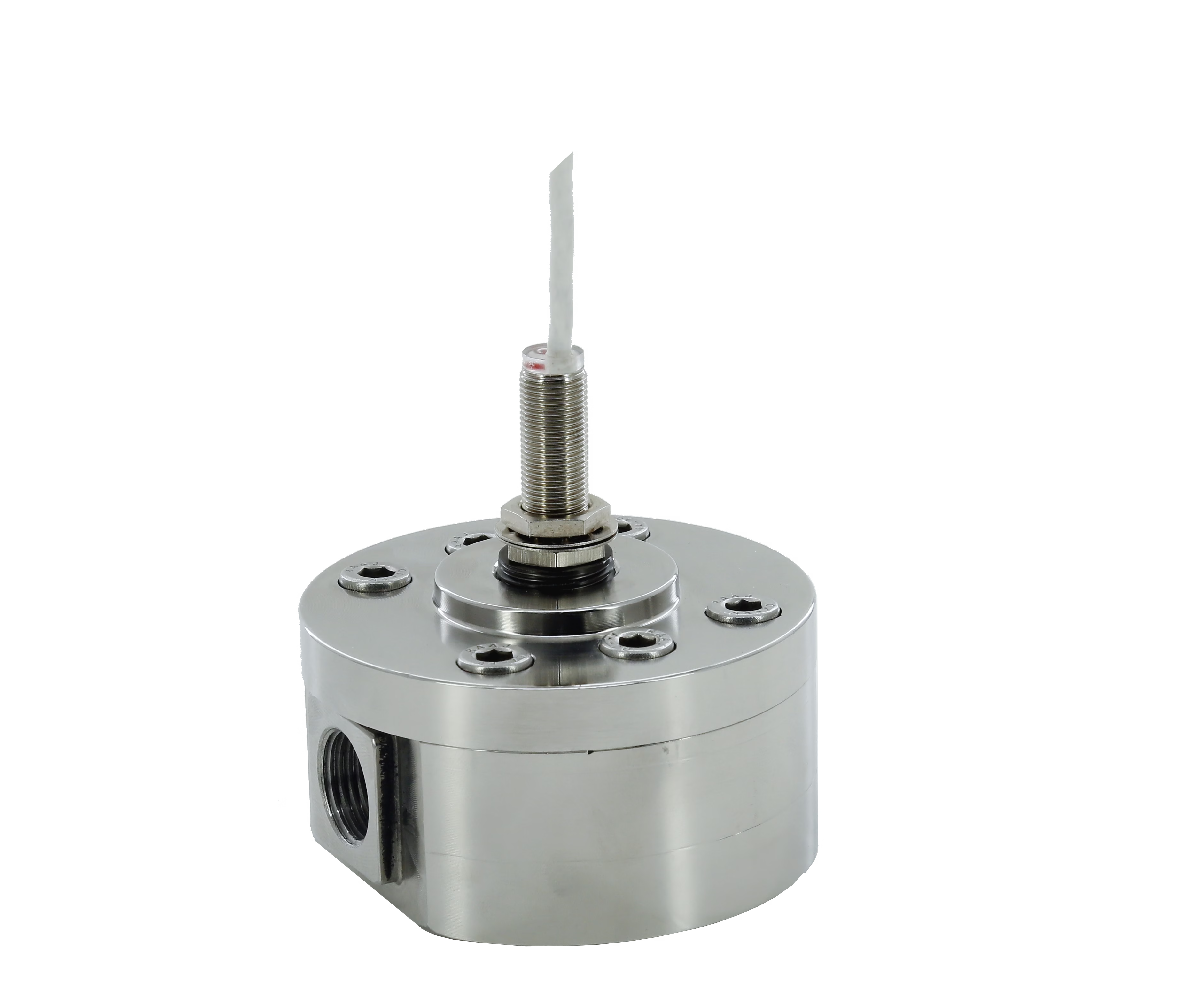
Tag: flow sensor

What is a Flow Sensor?

A flow sensor is an essential device designed to measure the flow rate of liquids or gases in various applications. These sensors convert the flow rate into an electrical signal, resulting in a corresponding pulse or a standardized output, such as 4 to 20 mA. This output is crucial for monitoring and controlling the flow in different industrial processes.

Broil: A Leader in Sensor Manufacturing

Broil is recognized as a world innovator in the manufacturing of flow sensors. Their advanced technology ensures accurate measurements and reliability across operations. The brand’s commitment to quality and innovation makes Broil a trusted choice for industries looking to implement effective flow measurement solutions.

Applications of Flow Sensing device

The applications of flow measuring pulse output device are vast and varied. From water treatment facilities to food processing, these devices play a vital role in ensuring operational efficiency. By providing accurate flow measurements, companies can enhance their process controls, reduce waste, and monitor environmental impact effectively. Broil’s fluid rate sensors are designed to meet the demands of these diverse industries, ensuring precise and reliable performance.

  • Broil Flow Sensors

    Broil Flow Sensors

    Understanding Flow Sensors: A Deep Dive into Sensotek Industries’ Innovations

    Sensotek Industries has established itself as a prominent player in the field of flow measurement technology. Specializing in the production of high-quality micro, mini and major flow sensors, including oval gear  and turbine flow sensors. Broil is dedicated to delivering innovative solutions that cater to a wide range of industrial needs.

    The oval gear flow sensor, designed for precision measurement, offers a high degree of accuracy and stability. It is ideal for various applications such as chemical processing, food and beverage, and oil and gas industries. Similarly, the turbine flow sensor operates on a different principle but serves a comparable purpose. It converts the kinetic energy of the flowing fluid into an electrical signal for precise flow measurement. Both types of sensors reflect Sensotek’s commitment to quality and their innovative approach to industrial challenges.

    In addition to these main offerings, Sensotek Industries also explores the realm of micro and mini flow sensors. These compact devices are particularly valuable in applications where space is constrained and only minimal flow rates need monitoring. Micro flow sensors exhibit great sensitivity and are increasingly used in medical devices, laboratory research, and other specialized applications. Meanwhile, mini flow sensors are apt for automotive and HVAC applications. Lastly, major flow sensors provide robust solutions for high-volume applications. This illustrates Sensotek’s ability to meet diverse customer requirements. Sensotek’s range of flow sensors, from minor models to major types, forms an essential foundation for effective flow measurement in numerous industrial contexts, underscoring their commitment to reliability and precision.

    Mini flow sensors have emerged as vital components in various industrial applications. Thanks to their compact size and impressive operational capabilities, these sensors are designed to provide accurate volume or mass measurements. They typically range from 6 liters/hour to 300 liters/hour. This wide measurement range allows mini flow sensors to cater to different requirements across multiple sectors. Ensuring optimal performance in diverse operating conditions.

    The operation of mini flow sensors hinges on advanced technological principles, such as Oval gear positive displacement or turbine/helical rotor. These ensure high precision in measuring fluid flow. This level of accuracy is essential for industries where maintaining flow rates is critical, including food and beverage production, chemical processing, and pharmaceuticals. For example, in the food and beverage industry, mini flow sensors play a crucial role in monitoring ingredients during mixing. They ensure that the production process adheres to strict quality standards. Similarly, in chemical processing, they help regulate the flow of various reagents, permitting effective control of chemical reactions.

    Adopting mini flow sensors in these industries not only guarantees the efficiency of operations but also promotes safety and compliance with health regulations. Their compact design allows for easy integration into existing systems. This facilitates retrofitting and minimizes operational disruptions. Furthermore, advancements in sensor technology have led to improved durability and resistance to corrosion. This makes these devices suitable for a wide range of fluids, including corrosive or viscous materials that could hinder performance.

    Ultimately, mini flow sensors serve as an indispensable tool in modern industrial applications, providing both reliability and accuracy in flow measurement. Their diverse utility across multiple industries speaks to their importance. The ongoing innovations being developed by companies like Sensotek Industries continue to push the envelope of sensor technology.

    Micro flow sensors represent a specialized category of flow measurement devices designed to accurately measure extremely low flow rates. They typically range from less than 0.1 liters per hour to 3 liters per hour. These sensors are indispensable for applications that necessitate high precision and reliability, particularly when dealing with minute volumes of fluids.

    The unique characteristic of micro flow sensors lies in their advanced technology. They often employ Oval gear positive displacement or turbine/helical rotor principles to detect flow changes accurately. These sensors are engineered to have a small footprint, making them ideal for integration into compact systems where space constraints are a significant consideration. Their ability to perform in challenging conditions also sets them apart. They can operate effectively in high-viscosity fluids and varying temperatures.

    When it comes to technical specifications, micro flow sensors typically feature a robust construction that accommodates versatile installation methods. Most models provide a linear output that correlates directly with flow rates. This allows for straightforward interpretation of measurement data. Additionally, many models are equipped with digital interfaces which facilitate easy integration into existing automated systems. This enables real-time monitoring and reporting.

    Micro flow sensors find their primary applications in laboratory settings and pharmaceutical processes. In laboratory applications, they are utilized for precise measuring tasks that involve the handling of delicate samples, such as in chemical synthesis or analytical procedures. Their capability to operate within narrow flow ranges makes them essential in ensuring the accuracy of experiments. Similarly, in the pharmaceutical industry, these sensors are critical for processes such as drug formulation and testing. Maintaining consistent flow rates can significantly impact product quality and efficacy.

    Major flow sensors serve a critical function in various industrial applications, designed specifically to measure flow rates that range from 50 liters/hour to an impressive 300,000 liters/hour. Their ability to accurately gauge high-volume flow is essential for industries that rely on precise measurement to optimize operations, ensure regulatory compliance, and enhance overall efficiency. Industries such as agriculture, waste management, and large-scale manufacturing exhibit a significant reliance on these sensors. This is due to their need for robust systems that can handle large quantities of fluids.

    In the agriculture sector, for instance, major flow sensors monitor water usage and irrigation applications. The data collected allows farmers to make informed decisions about resource management, thereby maximizing yield while minimizing waste. In waste management, these facilitate the tracking of wastewater flow, enabling efficient treatment processes and ensuring compliance with environmental regulations. This is crucial in maintaining sustainable operational practices across the industry.

    Similarly, in large-scale manufacturing, major flow measuring sensors are imperative for processes involving the transportation of raw materials and finished goods. They provide real-time flow data that is vital for inventory management and the optimization of logistics. The reliability of these sensors also contributes to maintaining high operational standards and reducing downtime. This can be costly in production environments.

    Furthermore, major flow sensors are scalable, making them suitable for industries that experience fluctuations in demand. Their adaptability ensures that businesses can efficiently manage varying flow rates without compromising accuracy or performance. The integration of advanced technology into these sensors enhances their functionality. They offer features such as predictive maintenance and remote monitoring capabilities. Such innovations reflect the significant role that it plays in driving industrial efficiency and sustainability across diverse sectors.
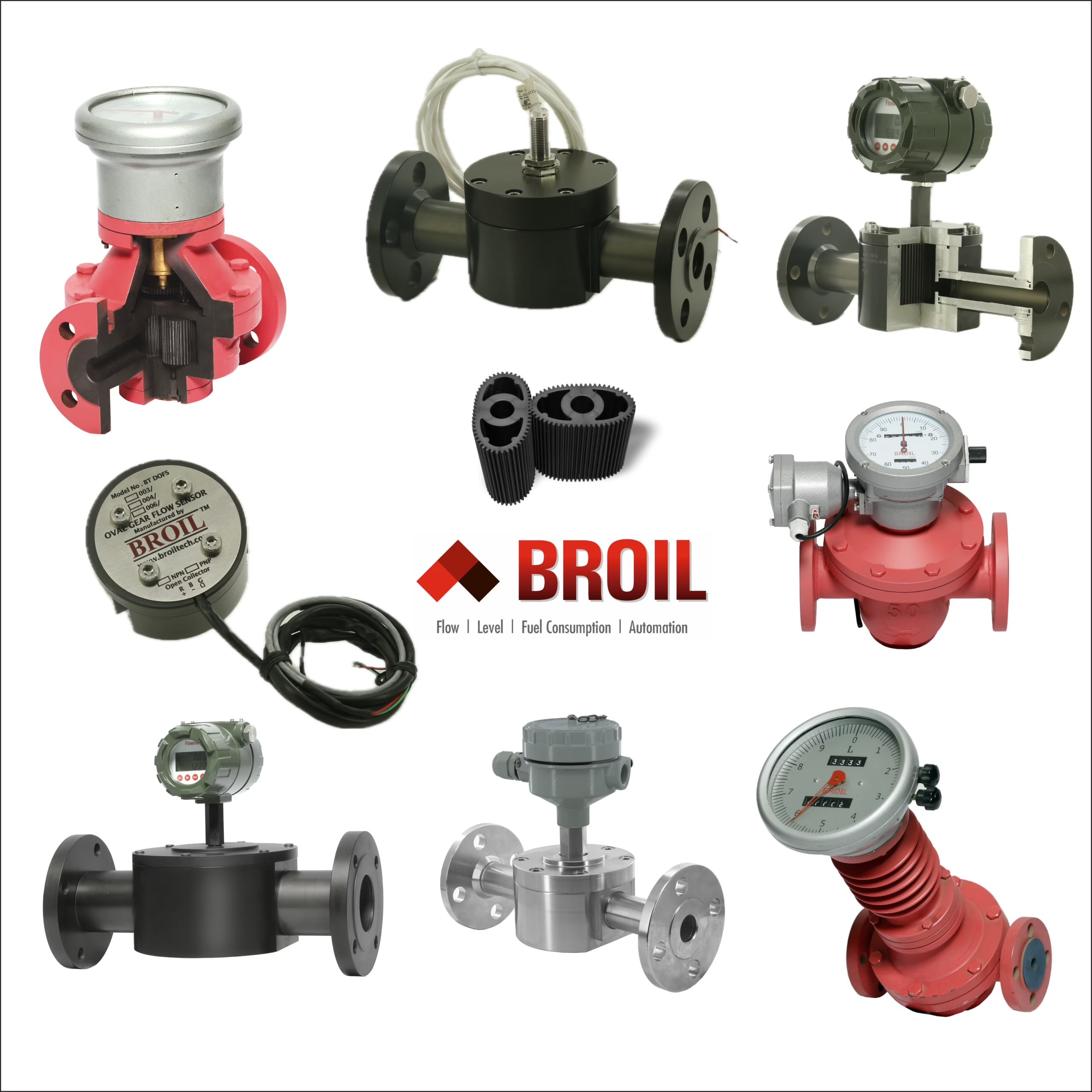
  • Broil Oval Gear Positive Displacement Flow Sensors

    Broil Oval Gear Positive Displacement Flow Sensors

    The Advantages of Oval Gear Positive Displacement Flow Sensors in Industrial Applications

    Positive displacement flow sensors play a critical role in various industrial applications by providing precise measurements of fluid flow. These sensors operate based on the principle of capturing a specific volume of fluid, which is then counted over time to determine the flow rate. This functionality is particularly advantageous in settings where precise measurements are essential. For example, in the food, fuel, oil, and pharmaceutical industries. The designs of positive displacement fuel flow sensors, including the oval gear variety, are engineered to deliver high accuracy and reliability. They are especially effective in fuel and oil fluids measurement with varying viscosities.

    Oval gear fuel flow sensors distinguish themselves through their unique design. It includes two interlocking oval gears that rotate within a fixed casing. As fluid enters the sensor, it drives the gears. Each complete rotation of the gears corresponds to a specific volume of fluid passing through the sensor. This mechanical operation allows for highly accurate measurement. It captures minute variations in flow where other sensor types may fall short. The ability to accommodate a wide range of fluid types and conditions makes oval gear sensors a preferred choice in challenging environments.

    The growing demand for accurate measurement tools in industrial processes underscores the significance of positive displacement flow sensors. In industries where precision is paramount, such as in batch processes, reliability of these fuel flow sensors becomes crucial. Furthermore, with the increasing complexity of modern industrial systems, the need for enhanced flow measurement accuracy is ever more pressing. As industries evolve and refine their processes, the importance of employing advanced technologies becomes clear. Oval gear positive displacement flow sensors are foundational in achieving this accuracy.

    Broil Sensotek Industries has established itself as a prominent player in the development and production of oval gear positive displacement fuel flow sensors. These are tailored for various industrial applications. With a steadfast commitment to innovation and quality, the company continuously strives to meet and exceed market demands. The organization’s expertise in the field allows it to deliver flow sensors that are not only reliable but also efficient. This ensures optimal performance across different operational contexts.

    One of the distinguishing features of Broil Sensotek’s oval gear flow sensors is their advanced pulse output capabilities. These sensors provide a seamless method for remote data controlling and process monitoring. By enabling real-time data transmission, the sensors facilitate better decision-making. They enhance operational efficiency. Users can monitor flow rates and conduct detailed analyses from a distance, resulting in improved oversight of production processes. These technological advancements contribute to greater accuracy and reliability in measurements, which are crucial for maintaining the integrity of various operations.

    In addition to their technical capabilities, Broil Sensotek Industries emphasizes the importance of quality assurance in their manufacturing process. Each fuel flow sensor is subjected to rigorous testing to guarantee performance and durability. This ensures customization for diverse industrial needs. The attention to detail in design and quality translates into products that minimize downtime and maintenance costs. They offer significant long-term value to end-users.

    Furthermore, the company’s commitment to customer satisfaction extends beyond product delivery. Broil Sensotek maintains active communication channels with clients, fostering collaborative relationships. This enables tailored solutions to specific challenges within their industries. Consequently, the fusion of innovative technology and responsive service solidifies Broil Sensotek’s position as a leader in the flow sensor marketplace. They respond adeptly to the evolving requirements of industrial applications.

    OEM Solutions

    Oval gear flow sensors serve a critical role in Original Equipment Manufacturer (OEM) solutions. They are particularly vital in sectors such as food, oil, and pharmaceuticals. These sensors offer precise measurement of liquid flow, which is essential for ensuring quality control and maintaining operational efficiency. This applies particularly across various machinery, notably in liquid filling machines and bottling equipment. Their design enables the accurate detection of low-flow rates, making them a dependable choice for OEMs that require precision in their production processes.

    food industry

    In the food industry, for instance, oval gear flow sensors are implemented in systems that fill various beverages, sauces, and oils. By ensuring that the correct volume is dispensed, these sensors not only promote consistency and quality but also assist in regulatory compliance regarding food safety standards. Their ability to handle viscous liquids without loss of accuracy further cements their position as indispensable components. This is particularly true in OEM solutions aimed at food production.

    Fuel and oil sector

    Similarly, in the oil sector, the use of oval gear flow sensors has proven beneficial for measuring the flow of different grades of oil. This applies in both refining and distribution processes. The reliability of these sensors leads to enhanced operational efficiency, reducing downtime attributable to measurement errors. They help streamline production by providing real-time data that enhance decision-making during production cycles.

    Pharmaceutical sector

    Pharmaceutical manufacturers also leverage oval gear flow sensors within their filling machines, where accuracy is paramount. These sensors ensure the precise dispensing of medicinal liquids, allowing for stringent adherence to dosage regulations. They enhance the overall efficacy of pharmaceutical products. The integration of oval gear sensors within existing machinery demonstrates their versatility and importance across various applications.

    Ultimately, the application of oval gear flow sensors in OEM solutions not only reinforces quality control but also boosts productivity. This reflects their vital role in modern industrial operations.

    In evaluating the advantages of oval gear positive displacement flow sensors, it becomes evident that these devices are invaluable. They achieve precise measurements across various industrial applications. The primary benefit of these sensors lies in their ability to provide accurate flow measurements. This is critical for maintaining operational efficiency and ensuring product quality. This makes them particularly appealing to businesses that rely on accurate flow data to manage their processes effectively.

    Moreover, the pulse output feature of oval gear flow sensors enhances operational efficiency. This is due to their capability to relay real-time data, which aids manufacturers in monitoring flow rates with precision. Such responsive data can lead to improved system performance, reduced waste, and ultimately, increased profitability.

    For OEMs, oval gear flow sensors serve as an optimal solution due to their robust construction and reliability. This reliability ensures minimal downtime and maintenance needs, thus preserving the efficiency of the operation.

    In conclusion, the adoption of oval gear positive displacement flow sensors from Broil Sensotek Industries represents a significant advantage for manufacturers and developers. This applies particularly in relevant industries. Their accuracy, operational efficiency, and seamless integration capabilities make them an excellent choice. These sensors enhance industrial processes. We encourage you to reach out to Broil Sensotek for any inquiries regarding these advanced sensors. Discover how they can meet your specific industrial needs.

    Key Takeaways

    • Positive Displacement Flow Sensors provide precise fluid flow measurements, crucial in industries like food, oil, and pharmaceuticals.
    • Oval gear sensors feature interlocking gears for accurate flow measurement, accommodating varying fluid types and conditions.
    • Broil Sensotek Industries excels in developing oval gear flow sensors, offering advanced pulse output capabilities for real-time data monitoring.
    • These sensors ensure reliability and efficiency, minimizing downtime and enhancing quality control across various industrial applications.
    • The adoption of Positive Displacement Flow Sensors supports improved operational efficiency and profitability for manufacturers.